[ WORK / ARA ]



ARA — AI AVATAR &
INFOTAINMENT
An empathetic AI avatar and infotainment system for autonomous vehicles. The future of (not) driving — enjoy the ride.
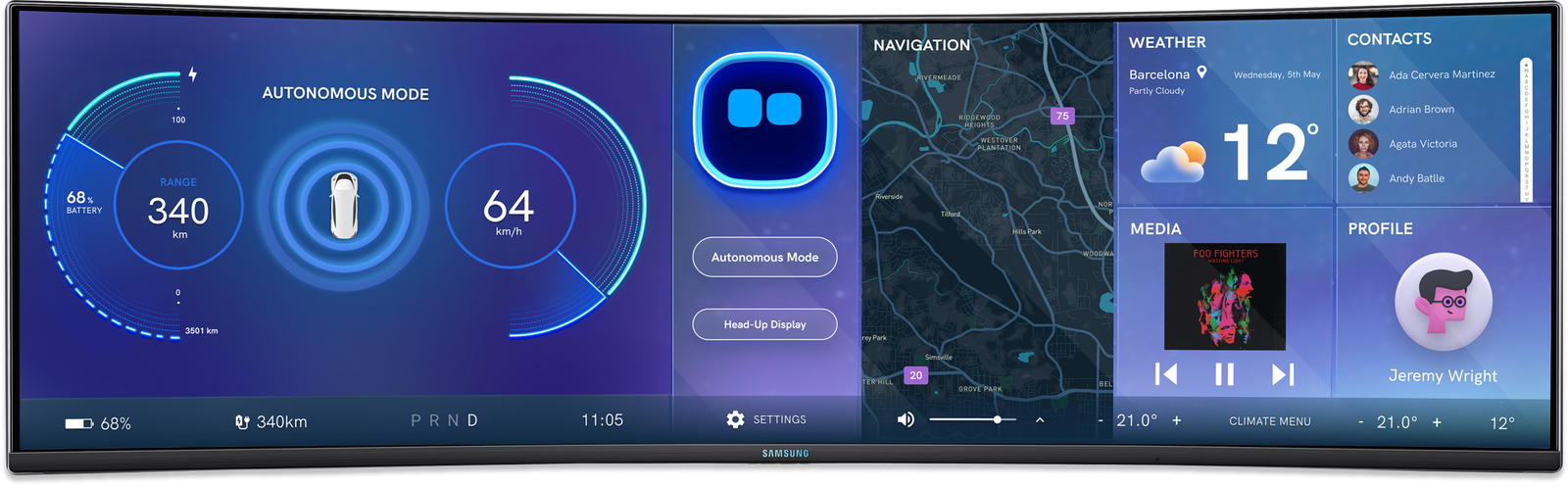
An empathetic AI avatar and infotainment system for autonomous vehicles. The future of (not) driving — enjoy the ride.
By 2030, 65% of consumers won't trust autonomous vehicles — while the demographic that would benefit most from them trusts them the least.
Aging populations are losing their independence as they become unable to drive safely. Existing in-car infotainment and (semi) autonomous interfaces fail to address their trust issues:
Show users what the car sees and why it decides — real-time computer-vision overlays and plain-language explanations build trust.
The AI acknowledges user emotions, especially in critical moments. A calm, reassuring tone reduces anxiety.
Multimodal interaction — voice, gesture, touch, haptic — lets aging users with varying abilities interact naturally, without training.
Research targeted Gen X and Baby Boomers (41–75) alongside Gen Z and Millennials (25–40) who drive or ride in cars — to understand fear and distrust of autonomous mobility, perceived loss of control, and other organisations' role in accelerating a self-driving future.
· EMERGENCY PROTOCOLS
· HAZARD DETECTION
· HEALTH MONITORING
· ADAPTIVE DRIVING
· COMPUTER VISION OVERLAY
· DECISION EXPLANATIONS
· AR HUD INTEGRATION
· SYSTEM STATUS INDICATORS
· MULTIMODAL AI (VOICE + GESTURE)
· TOUCH CONTROLS
· PERSONALISATION
· ENTERTAINMENT SYSTEM
Features were validated for the MVP through brainwriting sessions and card sorting with 10 users.
WIZARD OF OZ METHOD
In collaboration with Gestoos, we integrated real gesture-recognition tech: a pointing gesture triggers simulated information projected onto the windscreen. 7 participants tested multimodal interactions on a filmed Barcelona route with critical incidents — rain, an ambulance, pedestrians — while a teammate played the role of the AI assistant.
Voice (German Autolabs) + gesture (Gestoos) + touch + haptic feedback for natural, accessible interaction.
Computer-vision overlay shows pedestrians, vehicles, traffic signals and hazards as the car sees them.
Pixar-inspired animated avatar with expressions, calm emergency handling and health monitoring.
As part of the deliverable, we created a digital marketing video for the product.