[ WORK / GIFTING BET ]

THE GIFTING
BET
An end-to-end gifting platform chasing a €50M opportunity — from AI-powered discovery to personalised checkout.
And an honest look at what happens when a bet doesn't pay off.
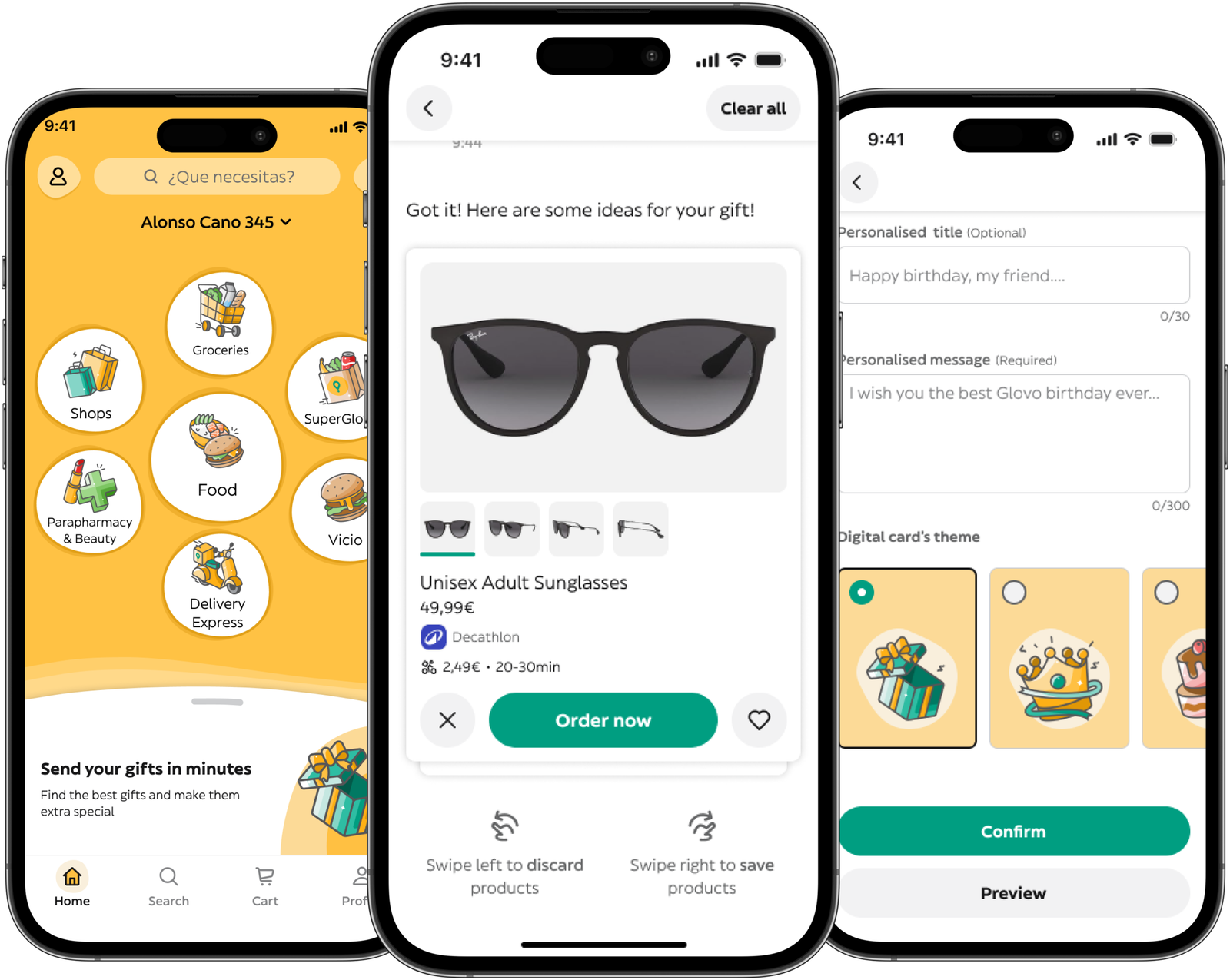
An end-to-end gifting platform chasing a €50M opportunity — from AI-powered discovery to personalised checkout.
And an honest look at what happens when a bet doesn't pay off.
At Glovo, a "Bet" is a strategic initiative addressing a significant market opportunity where the company doesn't have all the answers yet. Unlike traditional product development with predefined OKRs, Bets operate with directional goals and learning objectives. This project was selected as the main Bet for H2 2025.
I led design across all three projects in the initiative — Lower, Upper and Address Funnel — owning the end-to-end experience from sprint facilitation to final delivery, alongside a Senior Designer who owned a section of the Upper Funnel.
Despite 18.9% of retail orders being gifts, Glovo had no dedicated gifting experience.
Customers struggled to discover gift-worthy products and faced friction when sending orders to someone else's address — 23% of gift orders faced address-related issues, versus 16% for regular orders.
To uncover the best opportunities within the Retail vertical, we ran a collaborative one-week discovery sprint with cross-functional stakeholders — moving from raw ideas to tested prototypes in five days.
The most discussed idea — a gifting calendar synced with the phone's native calendar — felt like an obvious win, until we tested it. Users flagged it immediately as a privacy intrusion. It was killed before it ever reached engineering.
That's exactly what a sprint is for: making decisions cheaply, before they become expensive.
Shipping everything at once wasn't an option. We sequenced deliberately: the Lower Funnel gave engineering a contained, high-confidence scope to ship first — freeing the team to focus on the Upper Funnel, the most complex and highest-impact project, without splitting attention.
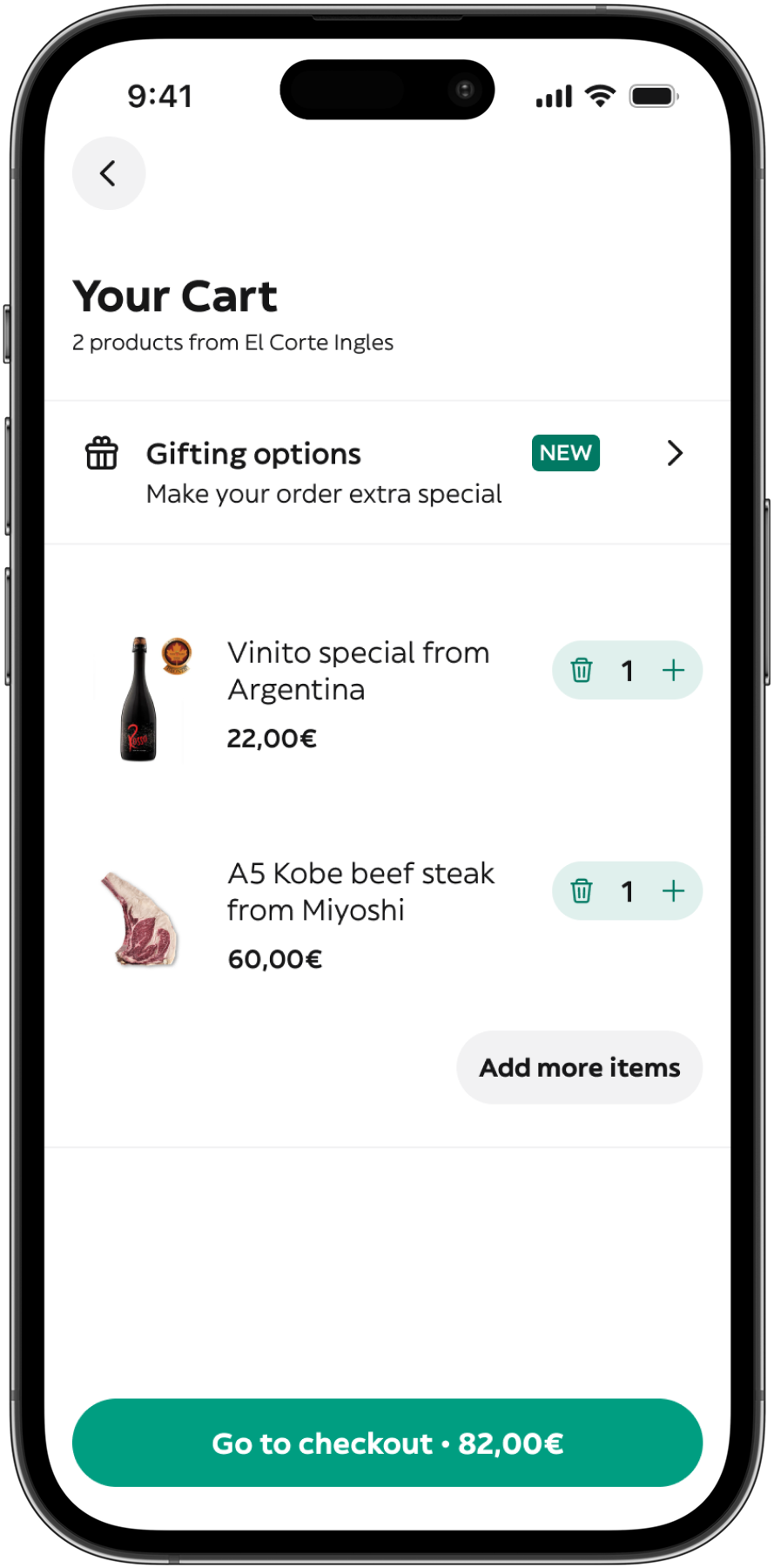
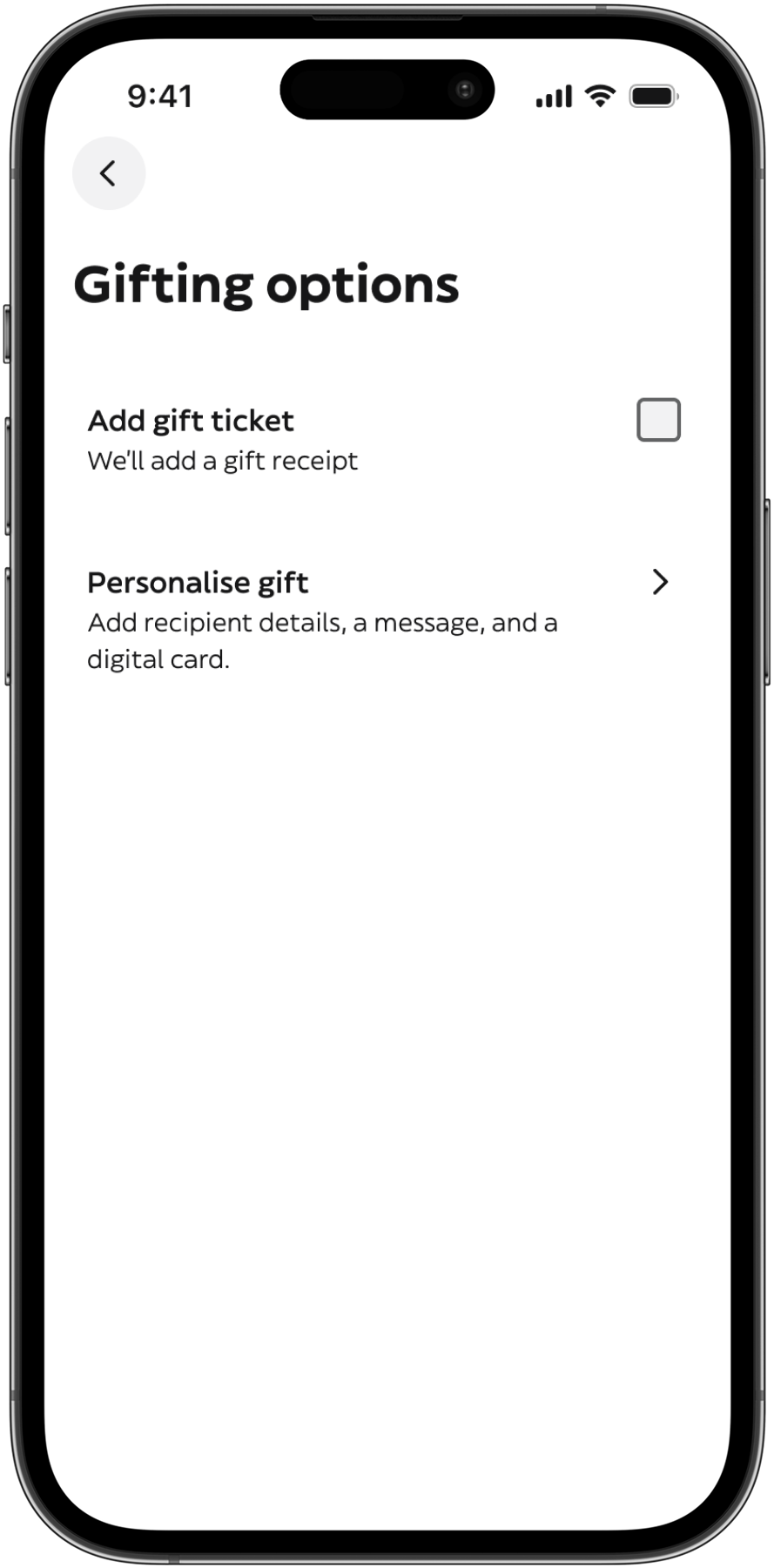
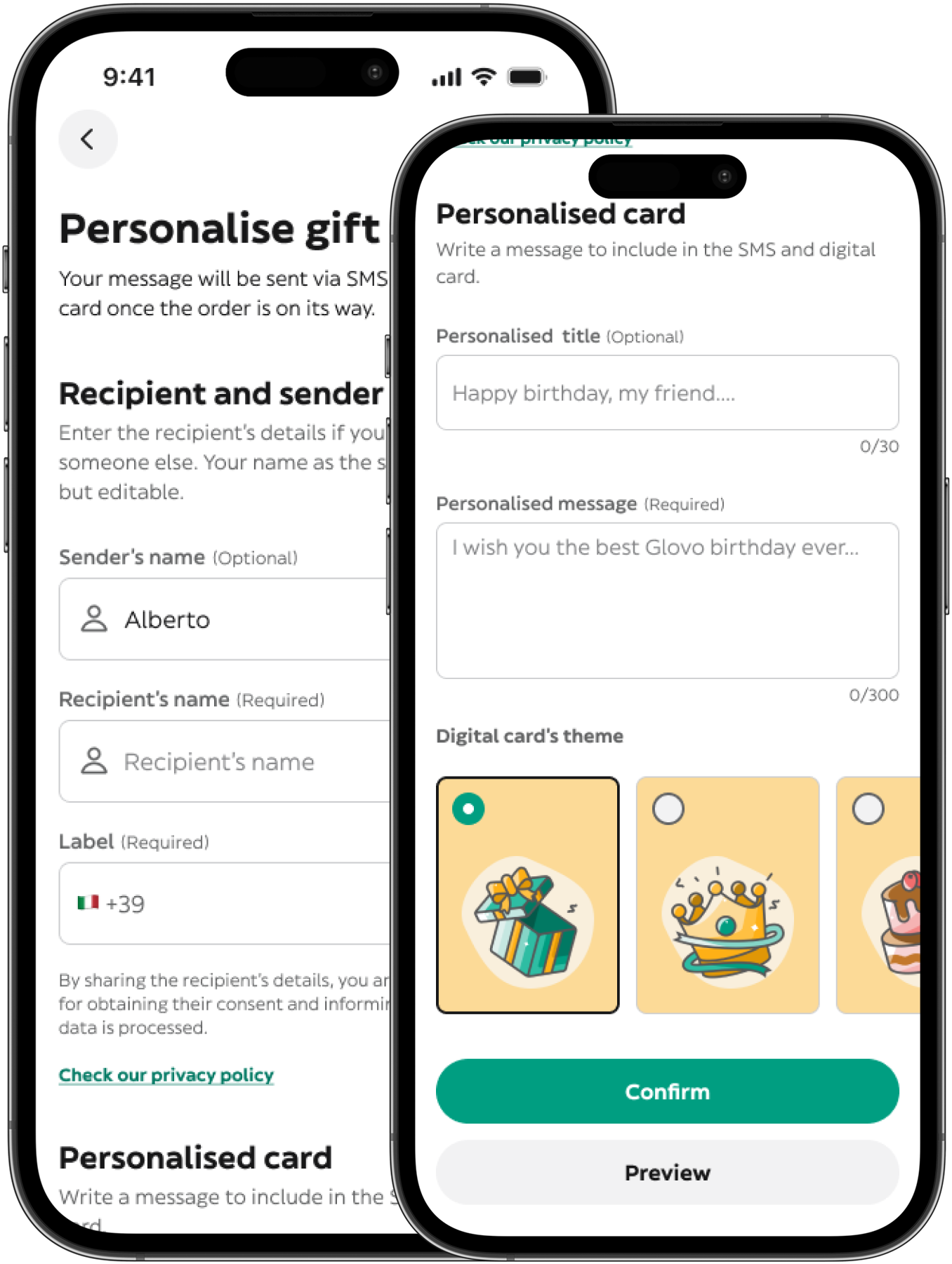
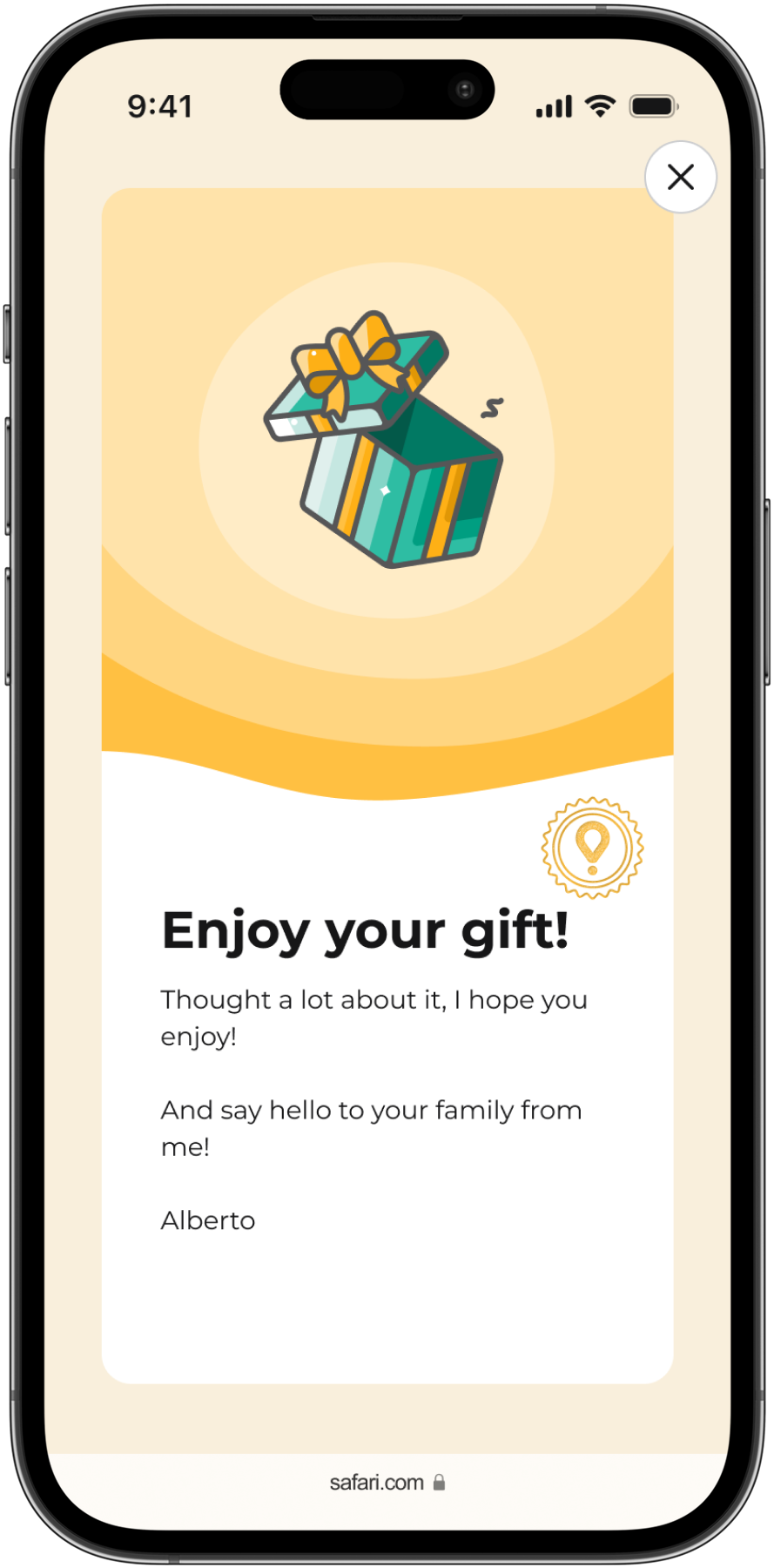
The checkout felt purely transactional: no personal touch, receipts showing prices to recipients, and "send to someone else" as an afterthought. We made gifting a first-class experience — personalised messages, digital cards, price-hidden receipts, and an intentional send-to-someone-else flow.
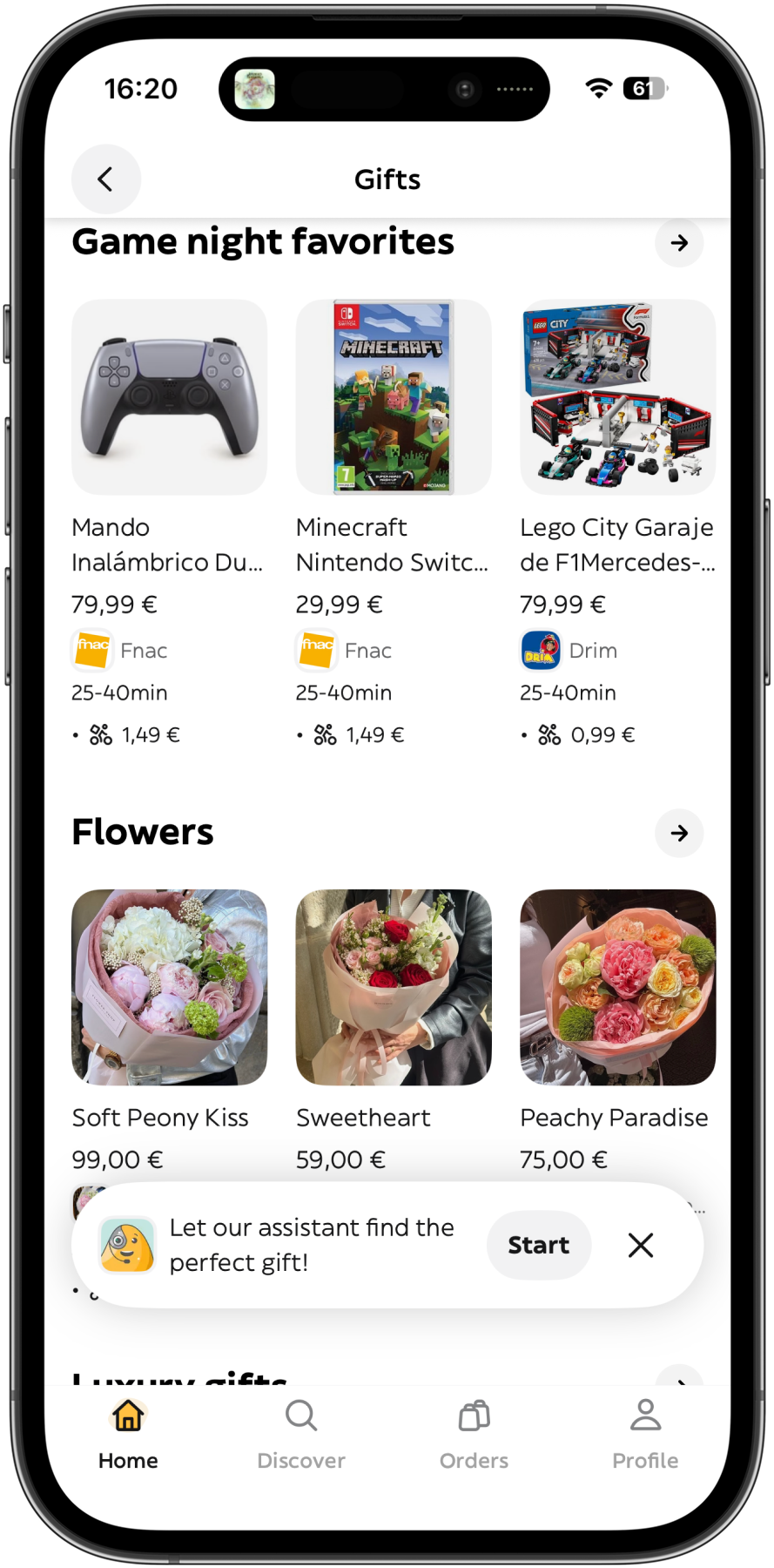
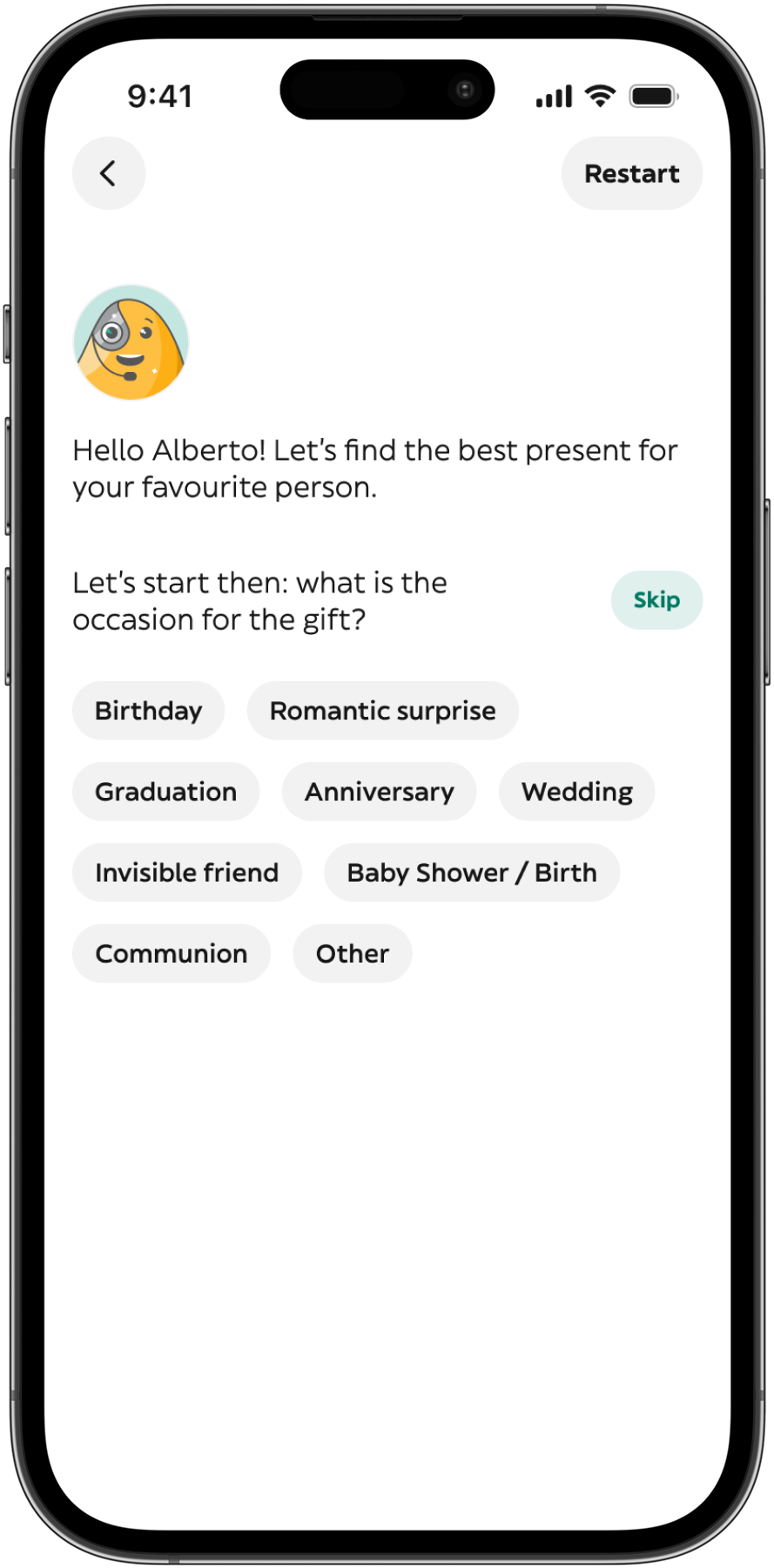
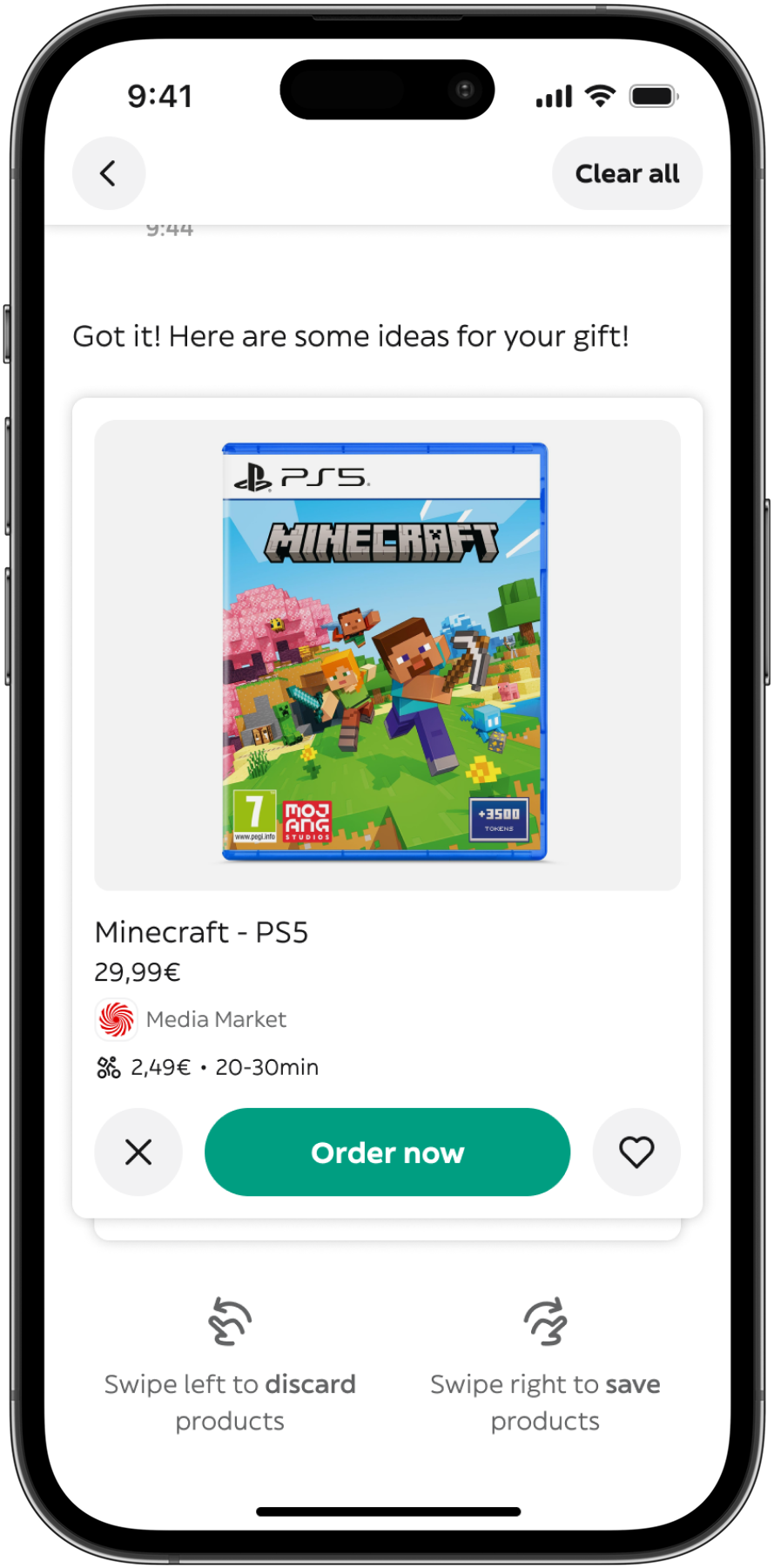
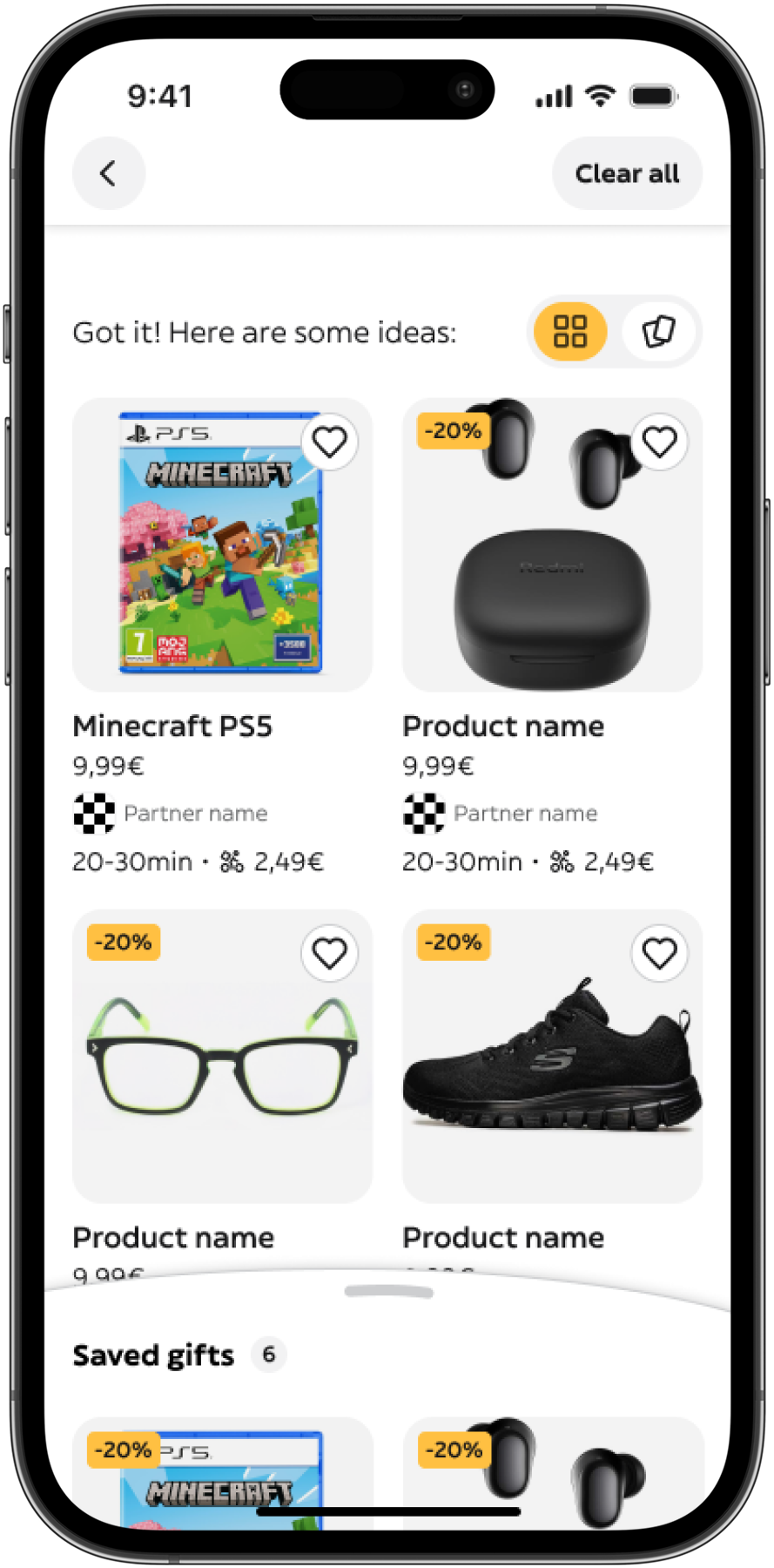
How do you help someone figure out what to gift in the first place? A guided, conversational discovery flow that felt like an AI assistant — without the engineering complexity of building one. A friendly agent asks about the recipient; answers filter the catalogue into a swipeable, curated deck of gift options.
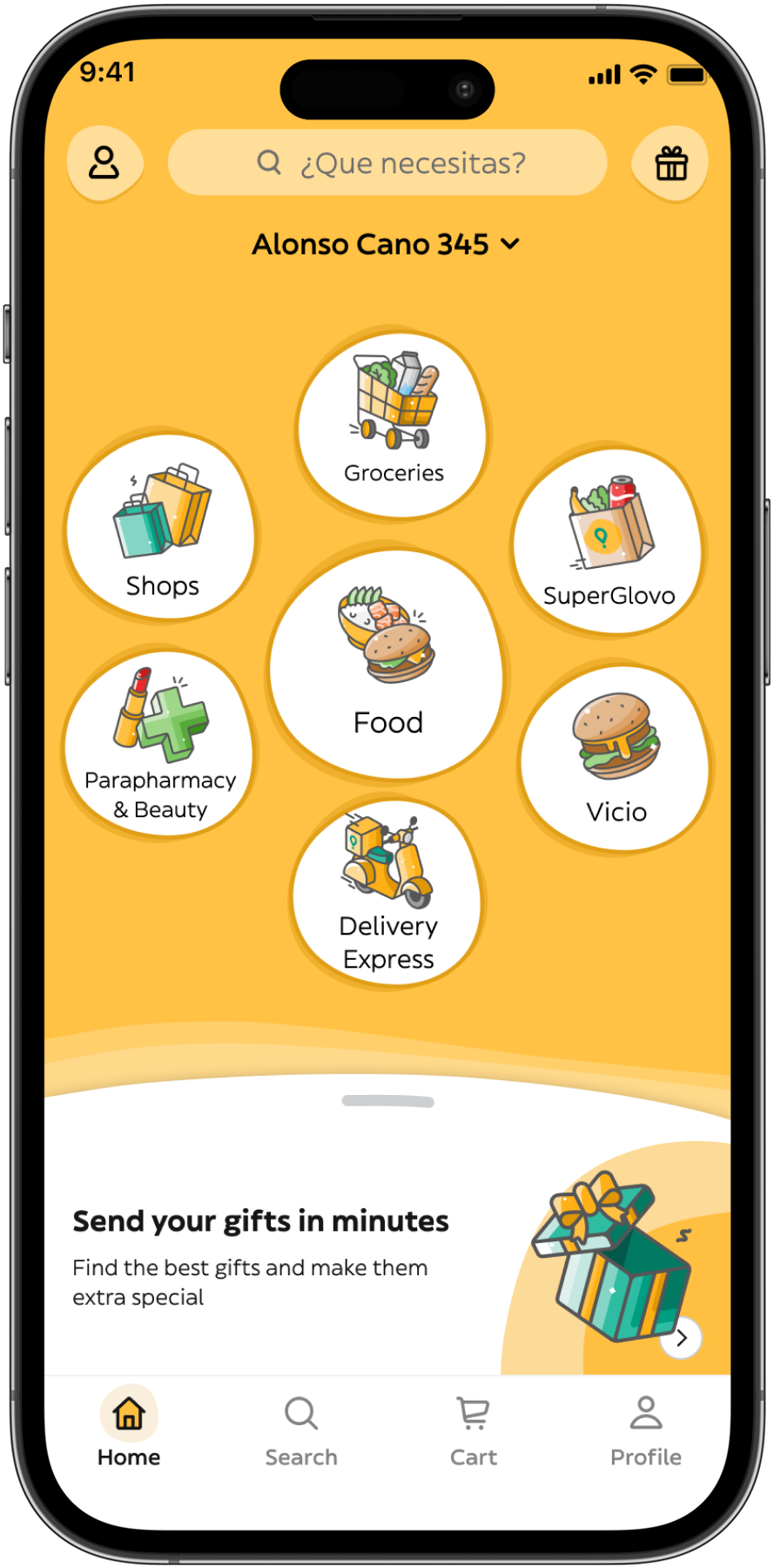
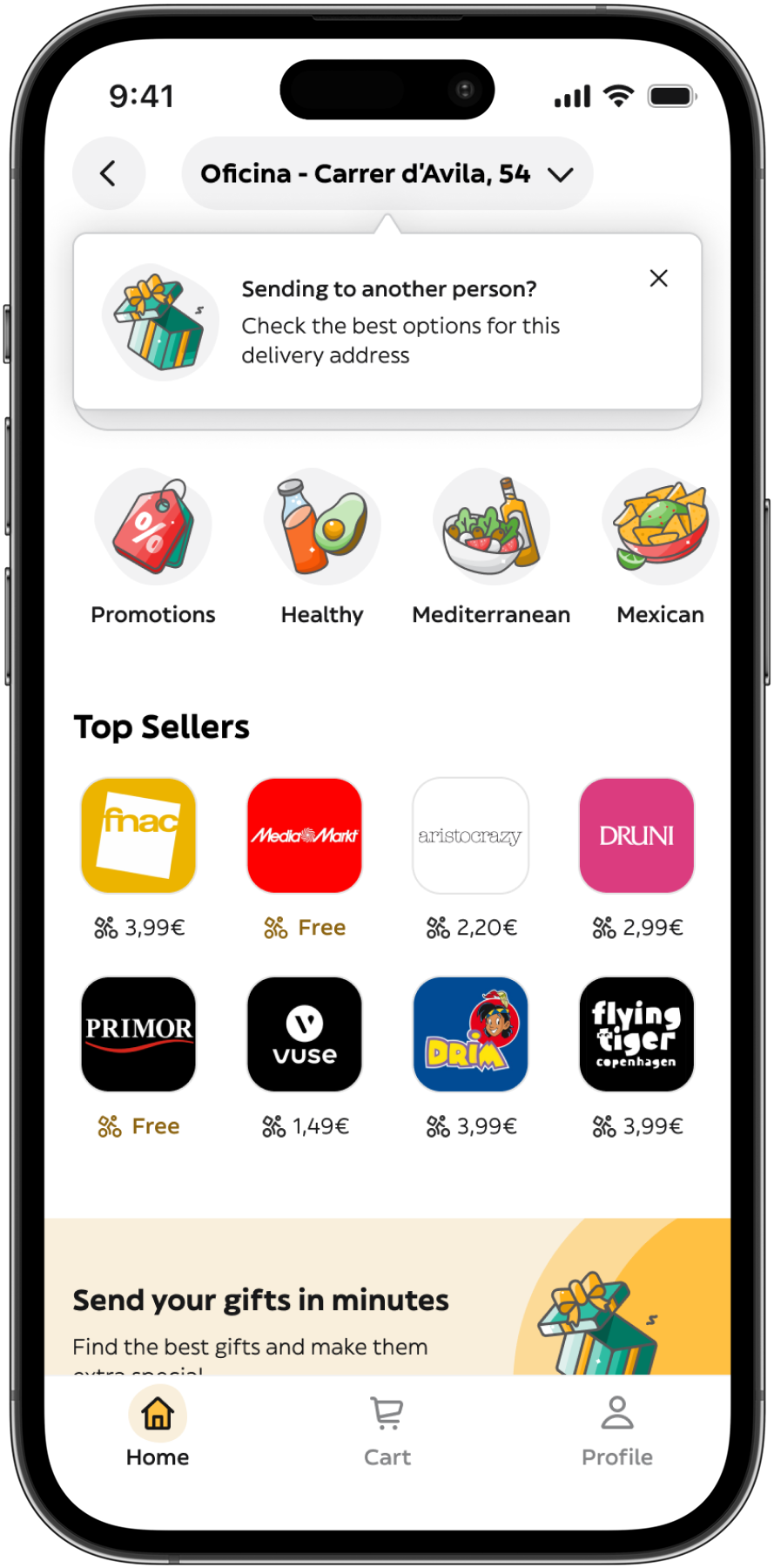
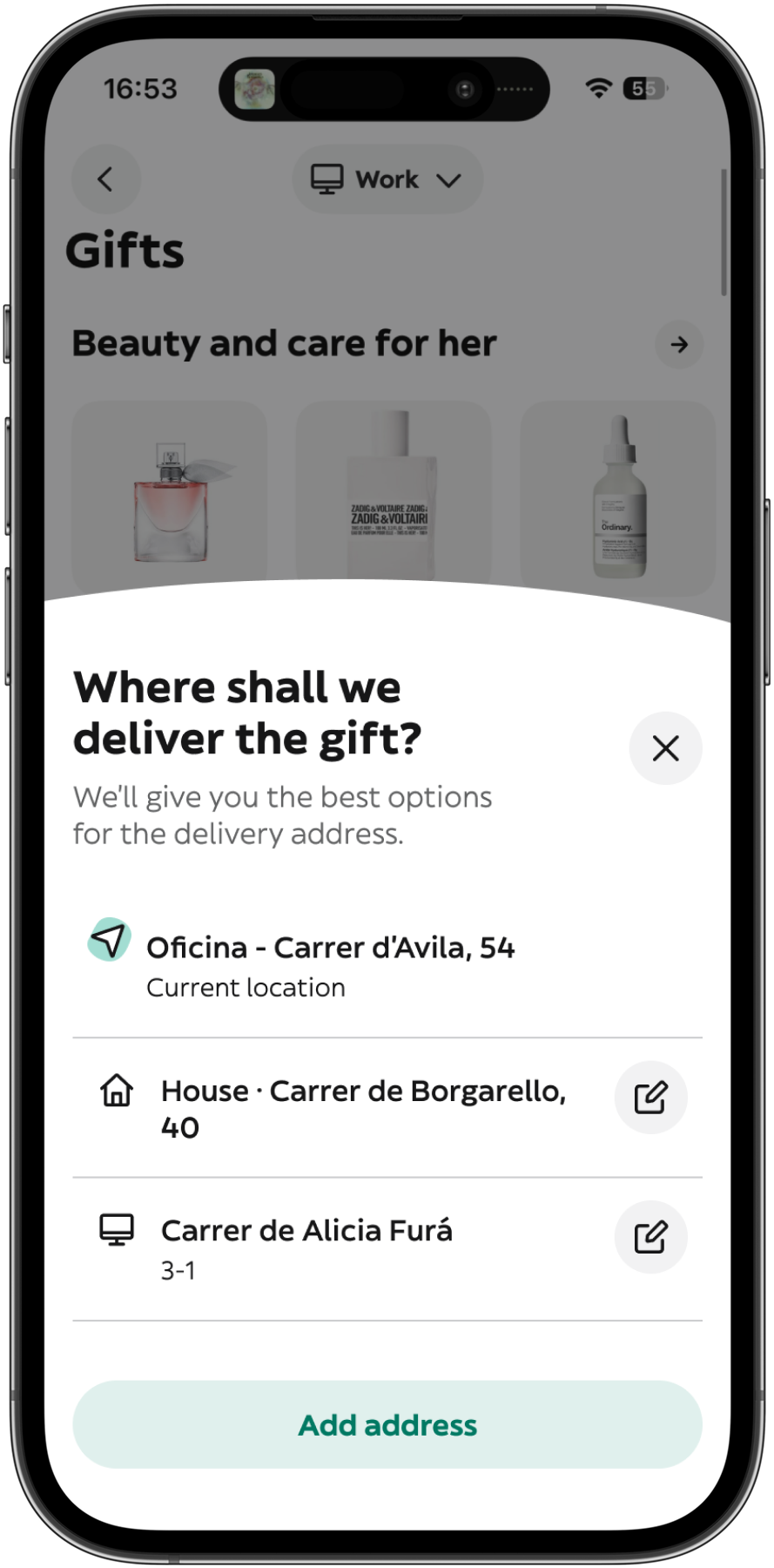
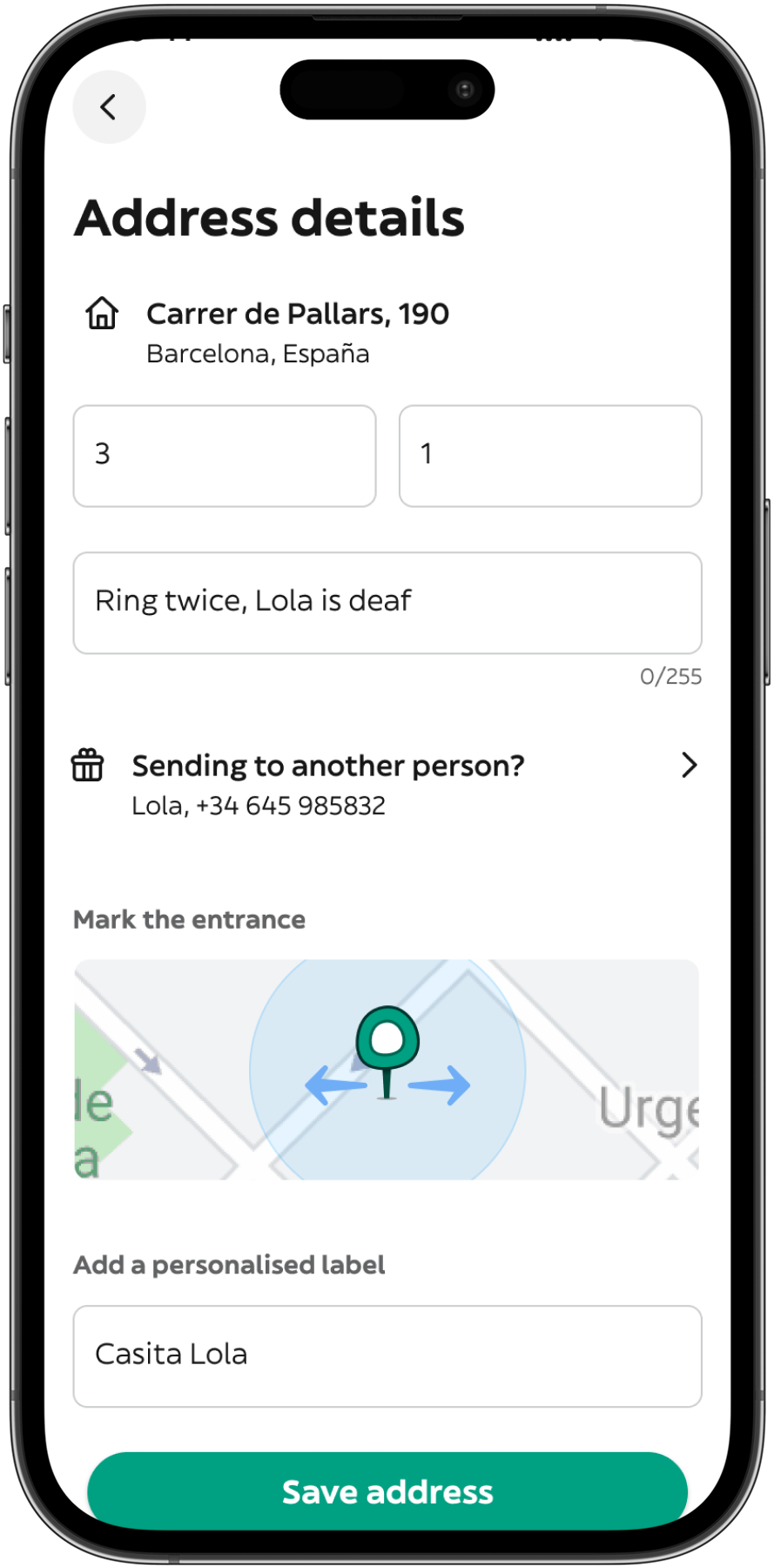
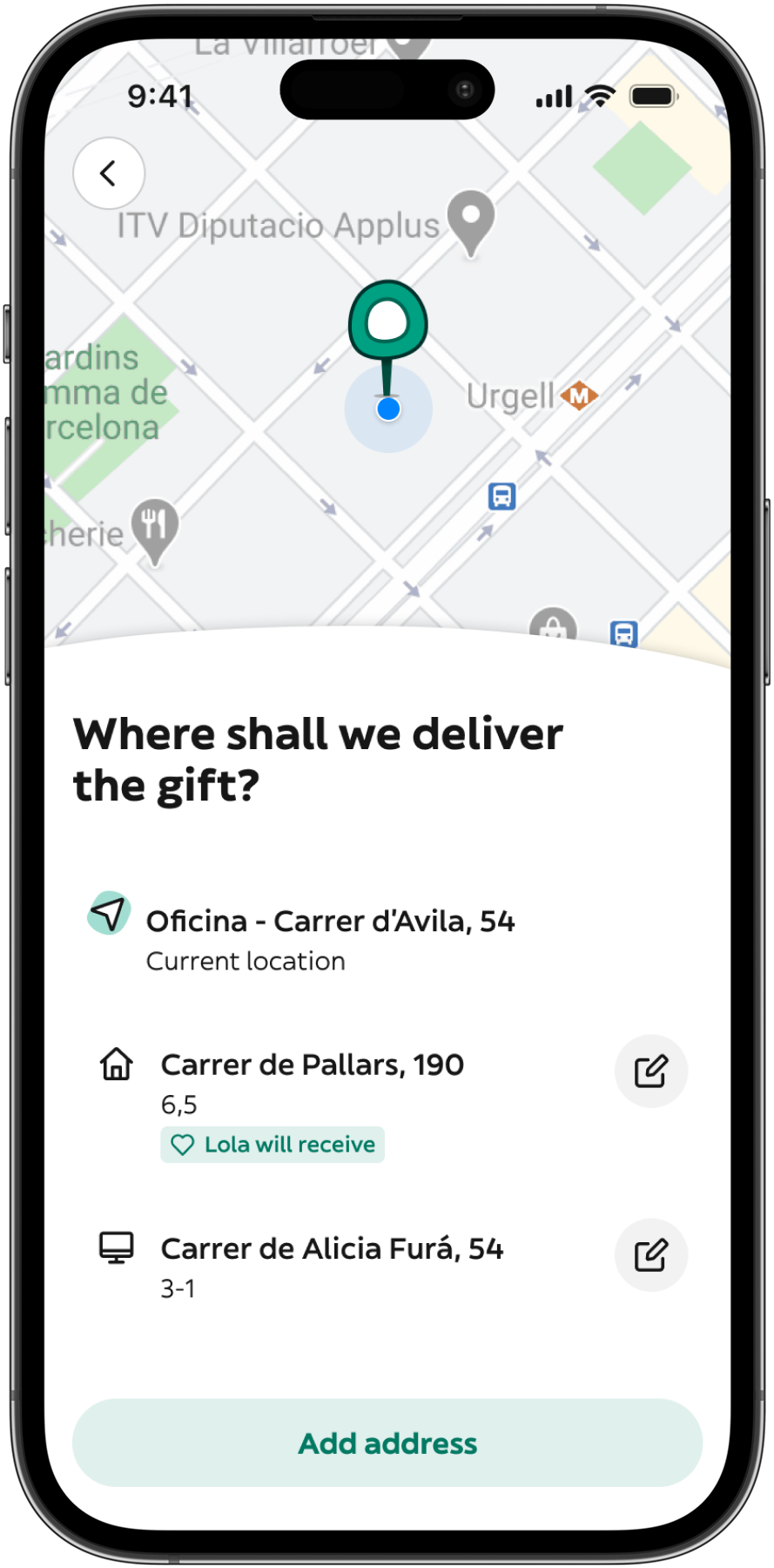
Gifting delivers to someone else's address — one you may not have saved, while the app defaults to your own. 23% of gift orders faced address issues vs 16% of regular ones. We focused on proactive education and catching the wrong address before it became a failed delivery.
Most engineers were involved from the initial sprint, giving input and helping avoid bottlenecks from the very beginning. After delivery, constant feedback loops kept us unblocking problems and shipping at speed.
2 engineering teams alternating on the 3 projects · Weekly demos with stakeholders · Design QA on pull requests · Bug bash during staff pre-release.